Need residential stump grinding in Middleburg?
- Independent providers handle every job
- Written quotes before any work
- Stump grinding and cleanup options
- Request an estimate online
No obligation
Request your stump grinding estimate
Got a stump sitting in your lawn and a mower that keeps dodging it? You are not alone. Stumps get in the way, grow shoots, and slowly rot. Grinding is the usual fix, and it is often simpler than people expect.
Wxhyceramics Tree Service is a referral service. We do not grind anything ourselves. We connect homeowners in the Middleburg area with independent local providers who handle stump grinding and give written quotes. Tell us about your stump, request an estimate, and see what providers say about price, timing and cleanup. Costs vary by stump size, roots and access. Ask, then quote: get the details in writing before any work starts.
Short answer: yes, and sooner is easier. A stump looks harmless. But it keeps changing every season. Providers in our network grind stumps below the soil line so your yard can get back to normal.
Timing changes everything here. A stump does not just sit there. It goes through stages, and each one brings a new headache.
Many fresh stumps send up green shoots. The roots are still alive and still trying to grow a tree. Cutting the shoots only works for a while.
Bark loosens and moisture soaks in. Soft wood attracts ants, termites and beetles. In humid summers, mushrooms often pop up around the base.
Rot spreads through the stump and into the roots. Freeze-thaw winters crack the wood and shift the ground. The stump turns into a trip hazard and a mower trap.
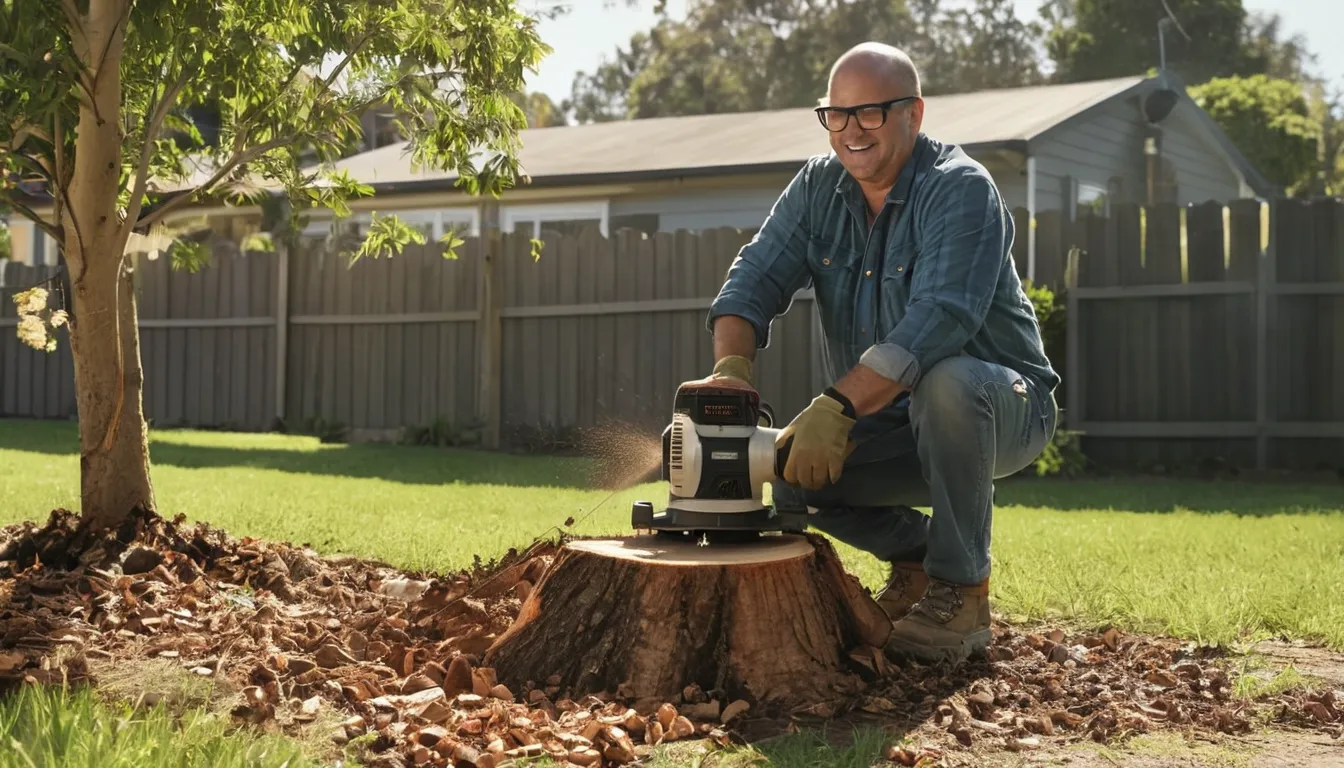
A provider brings a grinder with a spinning wheel fitted with hard cutting teeth. The operator sweeps it back and forth across the stump. It chews the wood into chips, usually several inches below ground level. Big stumps take a few passes. Small ones go quickly.
Grinding is faster and leaves less mess. It usually costs less, too. Full removal digs out the stump and much of the root ball. That is a bigger job. You may need it if you plan to build, pour a slab or install a pool on that spot. For a lawn or garden bed, grinding is often enough. Ask the provider which one suits your plans.
Wondering why two quotes can look so different? Here are the usual price drivers:
Quote before cutting. A good written quote lists the stumps, the grinding depth, cleanup and the total price. If the number changes on site, you want to know why. Typical U.S. ranges are in the table on this page. Your job may land above or below them.
Often, yes. Measure straight across the stump at its widest point. Snap a few photos and note any roots above ground. Many providers can give a ballpark from that. A final written quote may still need a quick look at the yard.
Dry ground is easiest for machines. Deep frozen soil or soggy lawns after a nor'easter can slow things down. That said, many providers grind through most of the year. Ask what the calendar looks like near you. Request a callback to check provider availability.
A little prep helps the visit go smoothly:
Some stumps have been there for years. They may be hidden under mulch, weeds or soil. Old wood can be hard as a rock, and roots may hold stones. Grinding is still possible. Just tell the provider how long the stump has been there, so the quote reflects it.
It should not, but location matters. Older neighborhoods often have tight yards, close fences and aging cast-iron or galvanized pipes. Basements sit close to some trees, too. Tell the provider about any lines or walls near the stump. Smaller machines can fit narrow paths.
Grinding leaves a pile of chips. Some homeowners keep them as mulch. Others have them hauled away. Ask which is included in the quote. The chips in the hole will not be good fill dirt, so plan for extra soil.
Fill the hole with topsoil and tamp it down. Expect it to settle over a few months as the chips break down. Top it off, then seed or lay sod. Watch for green sprouts and mention them to the provider if they show up.
Grass seed is fine in most cases. Planting a new tree or shrub on the same spot is trickier. Decaying chips can starve young roots of nutrients. Ask the provider whether to remove more chips or wait.
Ready to compare numbers? Send your stump details and see what local providers say.
A grinder chews the stump into chips, usually well below the soil line.
Providers can grind large surface roots that trip people or block your mower.
Choose to keep the chips as mulch or ask the provider to haul them away.
Ask providers to put the stump count, depth, cleanup and total price on paper first.
These are typical U.S. ranges. Your price depends on stump size, roots, access and local rates, so always get a written quote before any work begins.
| Item | Typical range | Notes |
|---|---|---|
| Small stump (under 12 in.) | $100 – $250 | Quick job, easy access |
| Medium stump (12 – 24 in.) | $200 – $450 | Common in home yards |
| Large stump (over 24 in.) | $400 – $900 | More passes and time |
| Extra stumps in one visit | $75 – $300 each | Price per stump often drops |
| Large surface roots | $100 – $300 | Added to base price |
| Minimum service fee | $100 – $250 | Applies to very small jobs |
Share your stump size, location and any roots, then request an estimate through the form.
We connect you with a provider in our network who serves your area.
Check the written quote for depth, cleanup and total price.
Pick a time with the provider, prep the yard and let them handle the rest.
Stumps rot slowly, draw pests and sprout shoots for years. Waiting rarely makes the job easier.
No more tripping or mower strikes on a hidden stump.
Compare written quotes so you know what drives the number.
Independent providers near you handle the work and the cleanup.
Typical U.S. prices run about $100 to $450 for most home stumps, and more for large ones or tricky access. Many providers charge by the inch, so ask for a written quote.
Most providers grind several inches below ground level, often around 6 to 12 inches. Depth affects price and what you can plant later, so confirm it in the written quote.
Often yes, once the hole is filled with topsoil and tamped down. Chips settle over time, so expect to top it off. For a new tree in that spot, ask the provider first.
Have a tree question or a job to price? Send a request for an estimate and a local provider in our network can follow up with next steps.
No obligation